
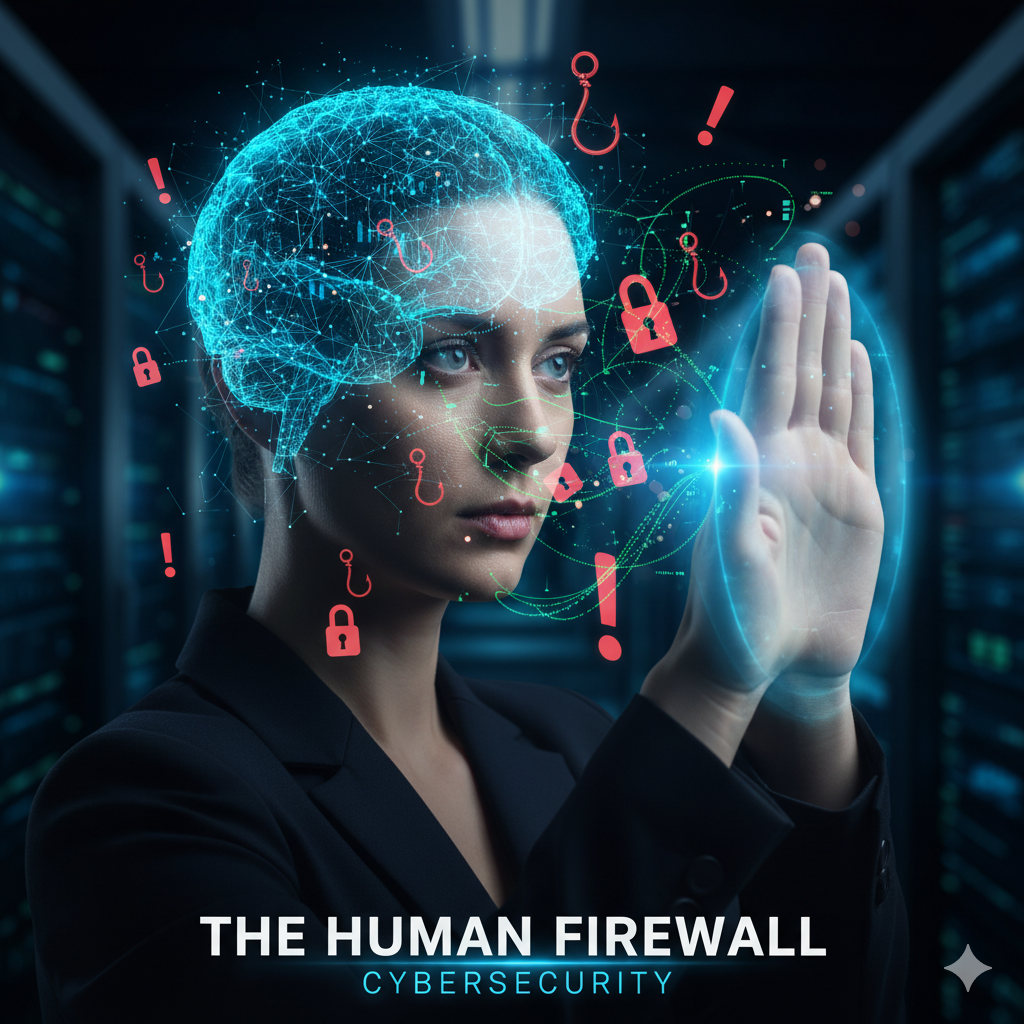
🛑 YOUR SECURITY FLAW: IT’S YOU.
You invest in the best defense systems, but you’re the one leaving the back door wide open. That’s the pathetic reality of modern cybersecurity.
We spend fortunes on complex tech—firewalls, antivirus, encryption—but all of it CRUMBLES when one person makes a simple, boneheaded mistake. The most crucial defense is YOU, the user, and you are, statistically, the EASIEST TARGET for a cyberattack.
🧠 Why Do Hackers ATTACK YOUR MIND?
It’s a brutal equation: Hacking hardware is hellishly difficult; exploiting human psychology is child’s play.
Cybercriminals use social engineering because it’s a cheap, devastatingly effective shortcut. They don’t need elite software flaws; they just need you to be distracted, terrified, nosy, or overly trusting.
- The “Bank” Scam: It’s a sham. A phishing lure designed to trigger pure PANIC so you instantly hand over your login details without thinking twice.
- The “Shocking” Link: It plays on your weakest impulse—curiosity. Click and you’ve likely invited malware into your life.
- The “Easy” Password: You choose it out of pure laziness. The inevitable consequence? It’s the digital equivalent of leaving your house keys on the doormat.
These aren’t technical failures; they are predictable human failures.
🥊 BECOME THE DIGITAL BRAWLER: Simple, POWERFUL Habits
Stop playing the victim. Start acting like the ultimate security guardian. These few, consistent habits will make you rock-solid against 99% of attacks.
- INSTANT SKEPTICISM (Trust NO ONE): If a message is unexpected, overly urgent, or demands sensitive data, treat it like poison. STOP. Verify the sender using an official number or site. Slam the door on typos or sloppy requests.
- CRUSH Your Password Weakness:
- GET A MANAGER: This is MANDATORY. Use a reputable Password Manager to generate and store a unique, complex monster for every single site.
- FORCE 2FA: Enable Two-Factor Authentication on EVERYTHING. Your password manager guards the key; 2FA is the unbreakable second lock.
- The Click-or-Die Test: NEVER click suspicious links. If you need to go to the site, manually type the address into your browser. Hovering over a link is a simple check that saves your digital life.
- UPDATE NOW. Seriously.: Software updates are often EMERGENCY PATCHES. Stop hitting “remind me later.” Enable auto-updates. That tiny vulnerability you’re ignoring is exactly what a hacker is PRAYING FOR.
- Public Wi-Fi is a TRAP: Free Wi-Fi is inherently dangerous. NEVER do banking or sensitive work on it without a VPN. Also, your phone’s lock screen must be the strongest barrier you can create.